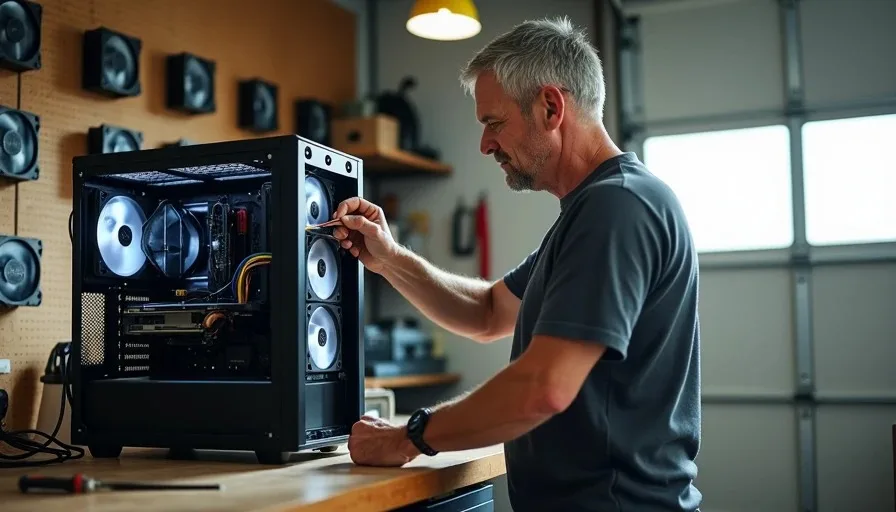
Last Tuesday, a law office called at 7:15 AM. Their sole workstation wouldn't boot — black screen, no POST, receptionist staring at a dead monitor with clients walking in at 8:00. I grabbed my go-bag, drove twelve minutes, swapped a failed power supply out of a three-year-old prebuilt, and had them running by 7:52. That's what a Houston PC builder actually does. Not YouTube builds with synchronized RGB and tempered glass panels. Real work, real deadlines, real people who need their machines to work when they turn them on. I've been at this since the late nineties, and the garage is still where the builds happen — not because I can't afford a storefront, but because the work doesn't need one.
What a Houston PC Builder Actually Does All Day
The job splits into three buckets, and none of them involve spending two hours routing cables for Instagram. Most of my week is small business IT — law offices, dental practices, a couple of accounting firms within fifteen miles of the house. These are machines that run QuickBooks and Outlook, not Cyberpunk. They need to be quiet, stable, and invisible.
The Weekly Breakdown
Day | Typical Work |
|---|---|
Monday | Emergency calls from offices that had weekend power outages |
Tuesday-Wednesday | Scheduled builds and upgrades for business clients |
Thursday | Parts ordering, BIOS updates, bench testing new hardware |
Friday-Saturday | Gaming rig builds for referred clients, local repair drop-offs |
Sunday | If nothing's on fire, fishing with my son at Lake Conroe |
The gaming builds come through word of mouth. Someone's nephew wants a PC, someone at the dentist's office mentions their kid plays Valorant. I don't advertise. Fourteen years in the same neighborhood means the phone rings enough.
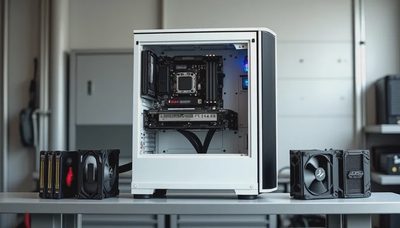
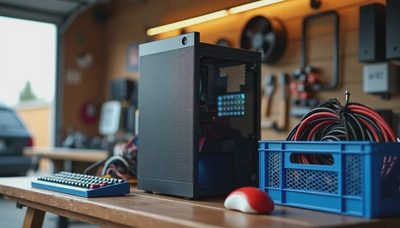
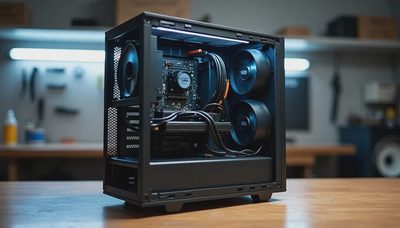
I keep a rolling workbench in the garage with a test monitor bolted to the wall, a milk crate full of modular PSU cables sorted by brand, spare 120mm fans hanging on pegboard, and a fifteen-year-old shop stereo that's seen better days. The bench has an anti-static mat that's covered in thermal paste stains and coffee rings. It's not pretty. It works.
The Philosophy: Stable and Quiet Over Everything
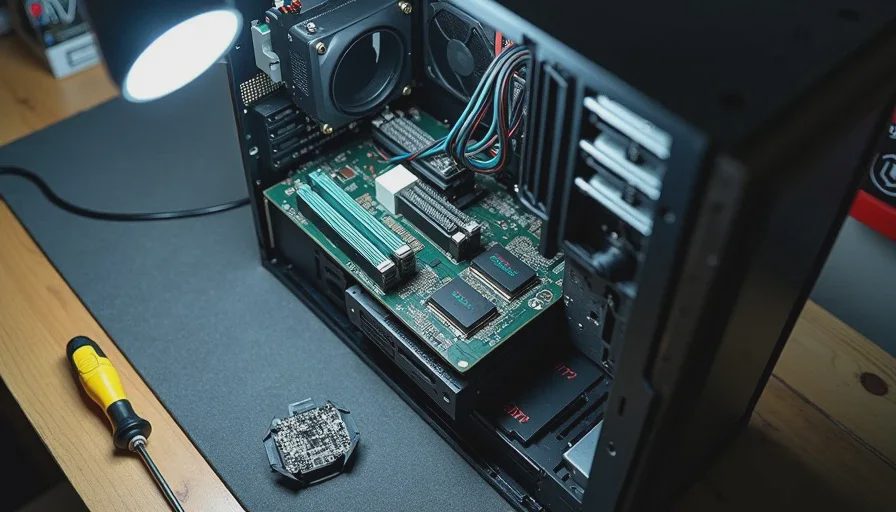
I build machines I'd put in my own house. That means three non-negotiables: they run cool, they run quiet, and they don't crash. Everything else is secondary.
I've seen too many builds where someone dropped two grand on a graphics card and cheaped out on the power supply. Or built a glass case full of RGB fans that sounds like a hair dryer under load. That machine sits on a desk three feet from someone's head for eight hours a day. Noise matters. Stability matters more.
What I Refuse to Do
Install liquid cooling in a business workstation — pointless risk for zero benefit
Use a power supply I haven't personally tested for at least a week
Build a machine with a single intake fan and call it done
Recommend parts based on a review embargo rather than real thermals
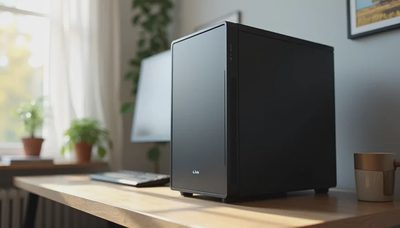
The quiet PC build philosophy came from experience, not preference. Three years ago I built a machine for a dental office — Ryzen 5, Noctua air cooler, an insulated Fractal case, Seasonic PSU. The hygienist called me two weeks later to ask if the computer was actually on. That's the goal. If you hear the PC before you see it, I haven't done my job.
Where It Started: The Pentium II That Cost Six Months
I was twenty years old, working a warehouse job, and I wanted to play Quake II. A friend had one at his apartment and I spent every Saturday there getting destroyed on dial-up. I saved for six months — picking up extra shifts, skipping nights out, putting away forty or fifty bucks a week — until I had enough for a Pentium II 350, an ABIT motherboard, 64MB of RAM, and a Voodoo2 card.
The first time I hit the power switch, nothing happened. No POST, no beep, just the power LED staring at me. I nearly threw up. Six months of saving and the thing was dead on arrival.
Turned out I'd forgotten to plug in the auxiliary power connector — a four-pin cable I didn't know existed. Fixed it in thirty seconds. Been chasing that feeling ever since. Not the panic. The moment when you find the problem and the machine comes alive. Twenty-six years later, it's still the same feeling.
What That First Build Taught Me
Read the manual before you install anything
Plug in every power connector, even the ones that look optional
A POST failure is almost always something simple
The machine doesn't care how much you spent — it cares about what's connected correctly
Why the Garage Still Works
Prebuilts have gotten better, I'll admit that. Dell and HP sell machines that work out of the box for reasonable money. But they still cut corners in the places most people never look — power supplies with barely enough wattage, proprietary motherboard form factors that make repairs a nightmare, single-channel RAM configurations that kneecap performance.
When I build a machine, I know every part in it. I've touched every cable, tested every component on the bench before it goes in the case. If something fails two years from now, I know exactly what's in there and how to replace it. Try getting that from a Best Buy warranty.
The garage isn't a compromise. It's a filter. People who want a computer-shaped object buy online. People who want something that works right — and stays working — find their way here. Sometimes that means a 2,000 rig for a guy who sim-races on weekends. The budget doesn't determine the quality of the work. The work determines the quality of the work.
Most days I'm done by six. I close the garage door, turn off the shop stereo, and go inside where my son Cody is probably asking Jen for a third snack before dinner. On Saturdays when I'm not working, we take the boat up to Lake Conroe. He caught a small bass last month. Held it up with both hands like he'd landed a marlin. Better than any POST I've ever diagnosed.
I turn it on so you don't have to.