

The amd ryzen 9 9950x3d vs ryzen 7 9800x3d decision looks simple until you price the whole build. One chip has twice the cores and is aimed at people who game, stream, render, compile, and keep a dozen applications open. The other is a focused gaming CPU that costs less, runs cooler, and leaves more money for the graphics card. I turn it on so you don't have to, and the short answer is this: most gaming PCs should use the 9800X3D. The 9950X3D earns its extra cost when you will actually use those extra cores.
What separates these two Ryzen chips
The Ryzen 7 9800X3D has 8 cores and 16 threads. The Ryzen 9 9950X3D has 16 cores and 32 threads. Both use AMD's Zen 5 architecture and 3D V-Cache, and both fit the AM5 socket. That means you can build either one on a suitable B650, B850, X670, or X870 motherboard, assuming the board BIOS supports the processor.
The important difference is not just the core count. The 9800X3D uses one compute chiplet, which keeps its gaming behavior straightforward. The 9950X3D uses two chiplets, with one carrying the extra cache. AMD's scheduling and chipset software handle that arrangement, but a dual-chiplet processor has more going on behind the scenes. For a normal game, that complexity does not automatically turn into higher frame rates.
Both chips are rated at a 120-watt default TDP, but real system power depends on motherboard settings, workload, cooling, and the rest of the parts. Do not treat that number as a cooler recommendation. A decent dual-tower air cooler is a sensible starting point for the 9800X3D. The 9950X3D deserves a strong dual-tower cooler or a capable 240 mm liquid cooler, especially in a warm room.
Gaming performance: buy the graphics card first
In the amd ryzen 9 9950x3d vs ryzen 7 9800x3d matchup, the 9800X3D is usually the cleaner gaming purchase. At 1080p with a powerful graphics card, the two can trade small leads depending on the game, memory setup, and BIOS version. At 1440p and 4K, the graphics card usually becomes the limiting part, shrinking the practical difference even further.
That matters because the price gap can fund a better GPU. A system built around the 9800X3D may let you move from a midrange Radeon or GeForce card to the next tier up. That upgrade can be visible in every demanding game, while a CPU difference that only appears at very high refresh rates can be difficult to notice from the desk.
The 9950X3D is not a bad gaming chip. It is an excellent one. It makes sense for a high-end build with a fast GPU, a 240 Hz monitor, and a user who refuses to close background applications. It is just not a magic frame-rate button. If your budget is tight enough that the processor forces you to compromise on the graphics card, choose the 9800X3D and put the savings where the pixels are.

Productivity changes the answer
This is where the amd ryzen 9 9950x3d vs ryzen 7 9800x3d comparison stops being a simple gaming recommendation. Sixteen cores can make a major difference in heavily threaded work such as Blender rendering, HandBrake encoding, large code builds, virtual machines, and serious photo or video production. The 9800X3D can handle those tasks, but it has half the physical cores and will generally take longer when every thread stays busy.
There is also the mixed-workload crowd. You might be recording gameplay, running Discord, keeping Chrome open, and exporting a video while the game remains responsive. The 9950X3D gives that workload more breathing room. It also makes more sense for a workstation that doubles as a gaming machine, rather than a gaming PC that occasionally edits a clip.
Do not buy the Ryzen 9 simply because “more cores” sounds safer. If your work is mostly Microsoft Office, web browsing, Lightroom adjustments, and gaming, those cores can sit idle while your budget takes the hit. A CPU is not an investment account. Buy capacity for the jobs you actually run.
Platform, cooling, and power planning
The amd ryzen 9 9950x3d vs ryzen 7 9800x3d choice affects more than the processor line on your receipt. The 9950X3D can justify a better motherboard power design, stronger cooling, and a higher-quality power supply. You do not need a $500 motherboard, but I would rather see a reliable B650E or X870 board with a good BIOS than a flashy board covered in unnecessary lighting.
For either CPU, use DDR5 memory in a matched kit. A 32 GB kit is adequate for a gaming-focused machine today; 64 GB is the more comfortable choice for modern multitasking, content creation, mod-heavy games, and development tools. Enable the memory profile in BIOS, then test stability instead of assuming the advertised speed works perfectly on the first boot.
Case airflow matters in Houston summer heat and everywhere else. Put two intake fans at the front or bottom, one exhaust fan at the rear, and keep the CPU cooler supplied with fresh air. A $20 improvement in airflow is more useful than decorative fans that barely move air. Watch temperatures and clock behavior during a long workload, not just during a five-minute benchmark.
Which build makes financial sense?
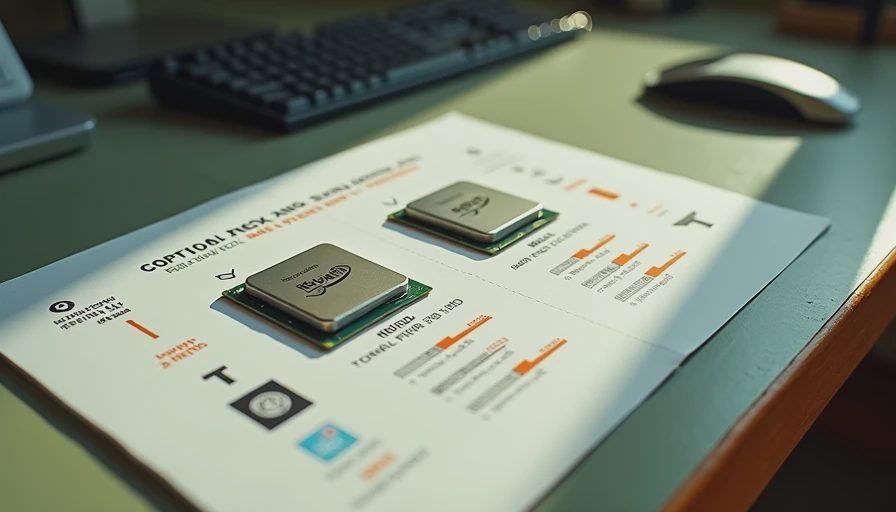
The 9800X3D launched at a lower price than the 9950X3D, and street pricing changes with sales. Use the actual prices in your cart, but remember that the CPU is only one line item. A $200 difference can cover a larger SSD, 32 GB more memory, a better cooler, or a meaningful graphics card upgrade. Those are not small compromises.
A sensible 9800X3D build might pair the processor with a B650 motherboard, 32 GB of DDR5, a quality air cooler, and the strongest GPU the remaining budget allows. That is the machine I would steer most first-time builders toward. It is fast, simpler to cool, and less likely to punish a parts list that already includes a costly graphics card.
A 9950X3D build should look intentional. Pair it with a high-end GPU, 64 GB of memory if your work needs it, fast storage, and cooling that can deal with sustained multicore loads. If the rest of the build is ordinary, the flagship processor is wearing a tuxedo to mow the lawn.
My buying recommendation
For the amd ryzen 9 9950x3d vs ryzen 7 9800x3d question, choose the Ryzen 7 9800X3D for a gaming-first PC, especially at 1440p or 4K. Spend the difference on the graphics card, a better monitor, or quieter case fans. That is the upgrade you will feel.
Choose the Ryzen 9 9950X3D if you regularly render, encode, compile, run virtual machines, stream while gaming, or need one computer to replace both a workstation and a gaming rig. Its extra cores are real value when they stay busy. They are wasted value when the machine spends most of the day launching games.
Before ordering, write down your three most demanding applications, your monitor resolution, and your graphics card budget. If two of those three answers point to gaming, buy the 9800X3D. If the workload list includes sustained multicore work, step up to the 9950X3D and budget for proper cooling. That is the practical answer, without the spec-sheet poetry.