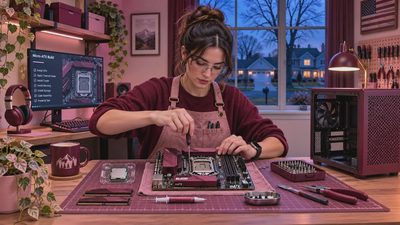
A few months ago, I had two nearly identical builds on my bench: Ryzen 5 5600 processors, 32GB of memory, and used graphics cards. One had a Radeon RX 6700 XT. The other had a GeForce RTX 3070. Both played well. One was the smarter purchase at the price. That is the point of this 6700xt vs 3070 used buying advice: the faster-looking card is not automatically the better deal.
If you are shopping today, judge the seller, cooler condition, VRAM, warranty, and actual asking price before you worry about five frames per second. A clean 6700 XT at $230 can be a better gaming card than a tired RTX 3070 at $280. At equal prices, the answer depends heavily on whether you care about ray tracing, streaming, or a long 1440p upgrade cycle.
The short answer for used buyers
For ordinary rasterized gaming, the RX 6700 XT is usually the card I would chase first. It carries 12GB of GDDR6 memory, while the RTX 3070 has 8GB. That extra capacity matters in newer games, especially at 1440p with high-resolution textures. The 6700 XT also commonly matches or edges out the 3070 in traditional rendering, although the gap changes from game to game.
The RTX 3070 earns its price premium through stronger ray-tracing performance, DLSS support, and Nvidia's generally useful NVENC video encoder. If you play Cyberpunk 2077 with ray tracing enabled, stream frequently, or use software that favors CUDA, the 3070 is the more flexible tool. If you mostly play competitive shooters, racing games, Baldur's Gate 3, and older titles without ray tracing, the 6700 XT gives you more memory for less money.
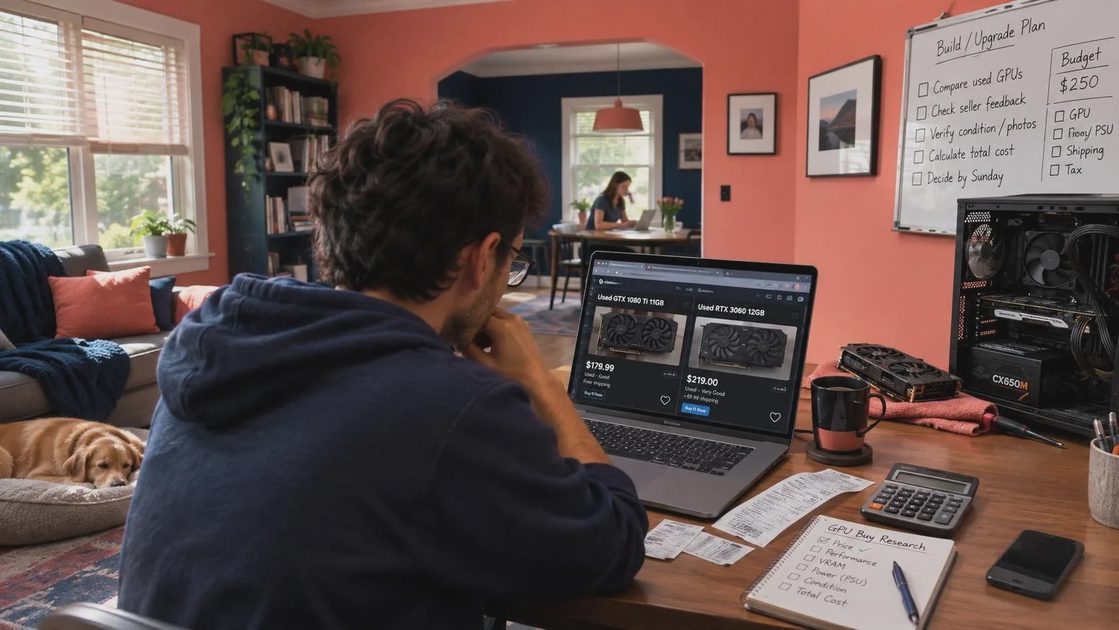
My basic 6700xt vs 3070 used buying advice is simple: buy the 6700 XT when it is at least $30 to $50 cheaper and in comparable condition. Pay extra for the 3070 only when its feature set solves a problem you actually have.
Performance, VRAM, and the 1440p question
At 1080p, either card is still plenty for a sensible gaming system. A Ryzen 5 5600, Core i5-12400F, or newer six-core processor will pair well with both. At 1440p, the comparison gets more interesting. The 6700 XT's 12GB buffer gives it breathing room when a game uses large textures or when you keep several demanding titles installed and configured at high settings.
Eight gigabytes is not an immediate death sentence for the RTX 3070. I have run one without trouble. The problem appears when a game pushes texture allocation, ray tracing, and high resolution at the same time. You may see stutter, texture compromises, or sudden frame-time spikes before the average frame rate looks terrible. That is why a used 3070 can feel excellent in one game and cramped in another.
Neither card is a magic 4K solution. You can play at 4K with sensible settings, but these GPUs make the most sense for high-refresh 1080p or 1440p. If your monitor is 1440p and you want to keep the card for several years, the 6700 XT's memory advantage is not a minor spec-sheet footnote. It is useful capacity.
Ray tracing, upscaling, and creator work
Here is where the 3070 fights back. Nvidia's second-generation RT hardware generally delivers a smoother ray-traced experience than the 6700 XT. DLSS can also produce a cleaner result than basic resolution scaling in supported games. It will not rescue a weak processor or a badly optimized title, but it is a legitimate reason to choose Nvidia.
The 6700 XT supports AMD FSR in many games, and FSR is not useless. It simply does not give you the same combination of image quality and broad software support in every title. For regular raster gaming, that difference is easy to ignore. For a ray-traced single-player library, it becomes harder to ignore.
Video work changes the decision again. The RTX 3070's NVENC encoder is convenient for OBS streaming and many editing workflows. The 6700 XT can handle gaming and ordinary recording, but I would not select it specifically for a creator workstation unless the software and workload had already been tested. This is the practical side of 6700xt vs 3070 used buying advice: select the feature you will use weekly, not the feature that looks impressive in a comparison chart.
What to inspect before handing over cash
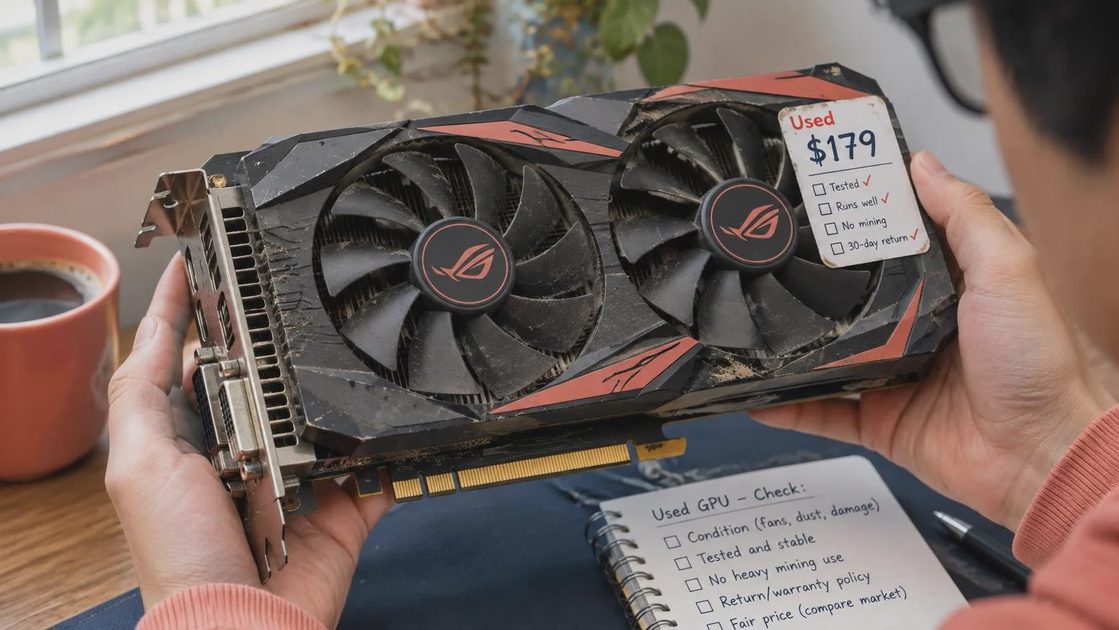
A used graphics card is a small appliance with a fan, a power circuit, and several years of heat cycles. Ask the seller to show it running before you pay. A ten-minute video is better than a clean photograph, but an in-person test is best.
Check the following:
- Confirm the exact model and memory size in GPU-Z or the driver panel. A 6700 XT should report 12GB, and a 3070 should report 8GB.
- Run a game, Unigine Superposition, or a similar load for at least 15 minutes. Watch for driver crashes, flashing textures, black screens, and fan surging.
- Listen at the card's normal gaming temperature. A faint bearing rattle is a warning. Loud airflow can be fixed; a grinding fan usually requires replacement.
- Inspect the power connectors, PCB edge, and cooler screws. Burn marks, stripped screws, bent brackets, and missing backplate hardware lower the value.
- Ask whether the card lived in a mining rig, ran undervolted, or was repaired. Mining use does not automatically kill a GPU, but it makes fan and thermal inspection more important.
Do not accept “it was working when I boxed it” as a test. A used card should earn your money while connected to a display.
Power supplies, heat, and case fit
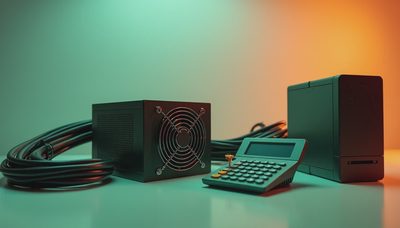
Both cards belong in a decent gaming power supply, not a mystery-brand 500-watt unit pulled from an office computer. A quality 650-watt supply is a comfortable match for a mainstream six-core build with either GPU. Look for units from established lines such as Corsair RM, be quiet! Pure Power, Seasonic Focus, or Super Flower Leadex, and check the actual model rather than trusting the badge.
The RX 6700 XT has a typical board power around 230 watts, while the RTX 3070 is around 220 watts. Real consumption varies by model and power limit. In a hot garage, case airflow matters more than the small paper difference. Use two separate PCIe power cables when the power supply provides them, keep front intake fans unobstructed, and avoid mounting either card against a solid side panel.
Large triple-fan versions can be quiet, but measure your case first. Some Sapphire Nitro+, PowerColor Red Devil, ASUS TUF, and MSI Gaming X models are long and thick. A card that does not fit is not a bargain.
My buying rule and final recommendation
My final 6700xt vs 3070 used buying advice is based on three price bands. Under $220, a clean 6700 XT is usually worth serious attention. Around $230 to $260, compare condition and included warranty rather than brand loyalty. Above $280, I would want an unusually clean 3070, strong remaining warranty, or a clear need for DLSS, ray tracing, or NVENC.
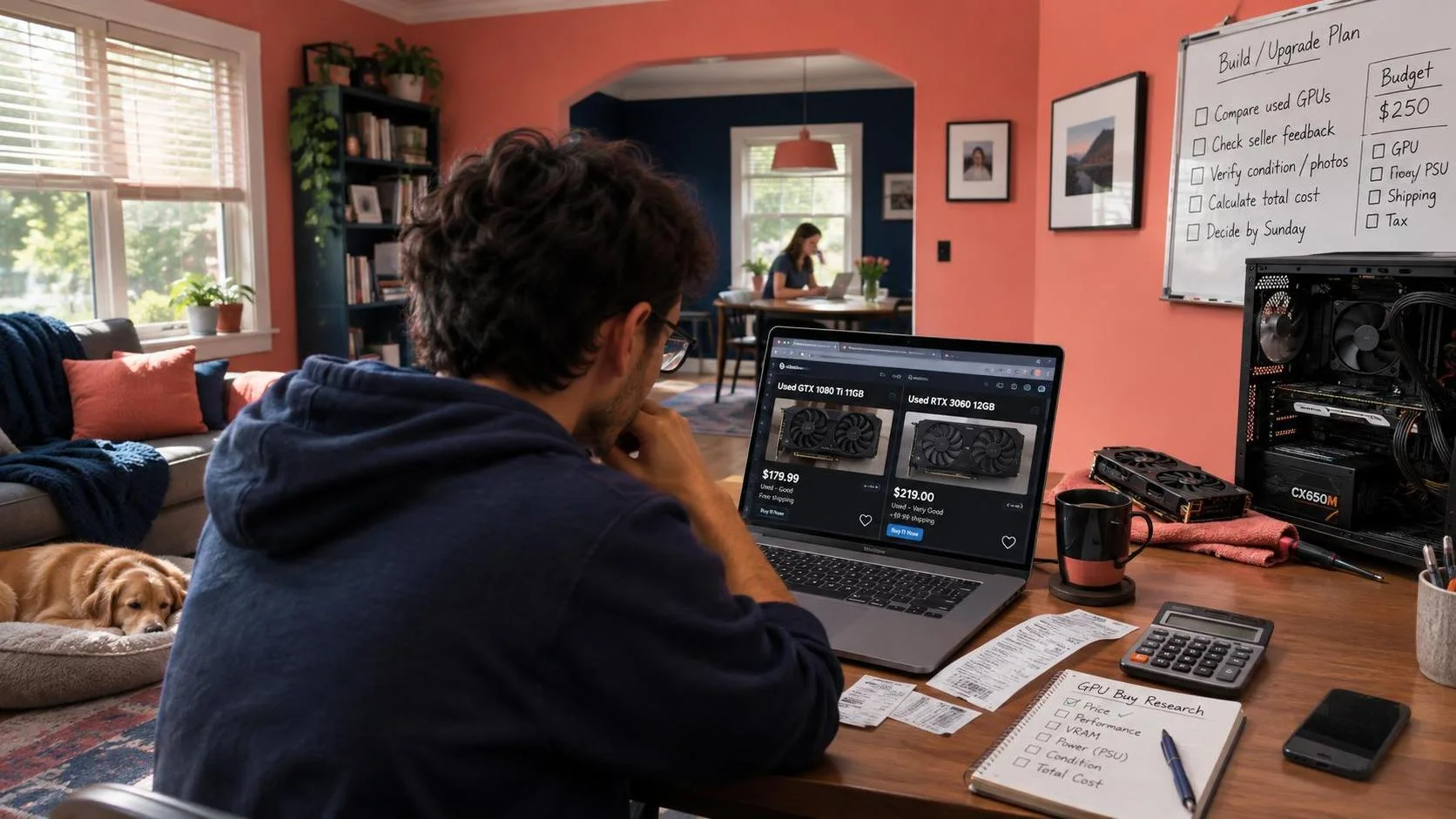
Before you message a seller, write down your monitor resolution, favorite games, power supply model, case clearance, and maximum price. Then ask for a GPU-Z screenshot and a short load-test video. If the seller refuses basic proof, walk away. There will be another card next week.
For most used 1440p gaming builds, I would install the RX 6700 XT and spend the saved money on a better SSD, a quality power supply, or two quiet case fans. I would choose the RTX 3070 for ray tracing, streaming, or CUDA-dependent work. That is the whole decision without the hype. I turn it on so you do not have to.